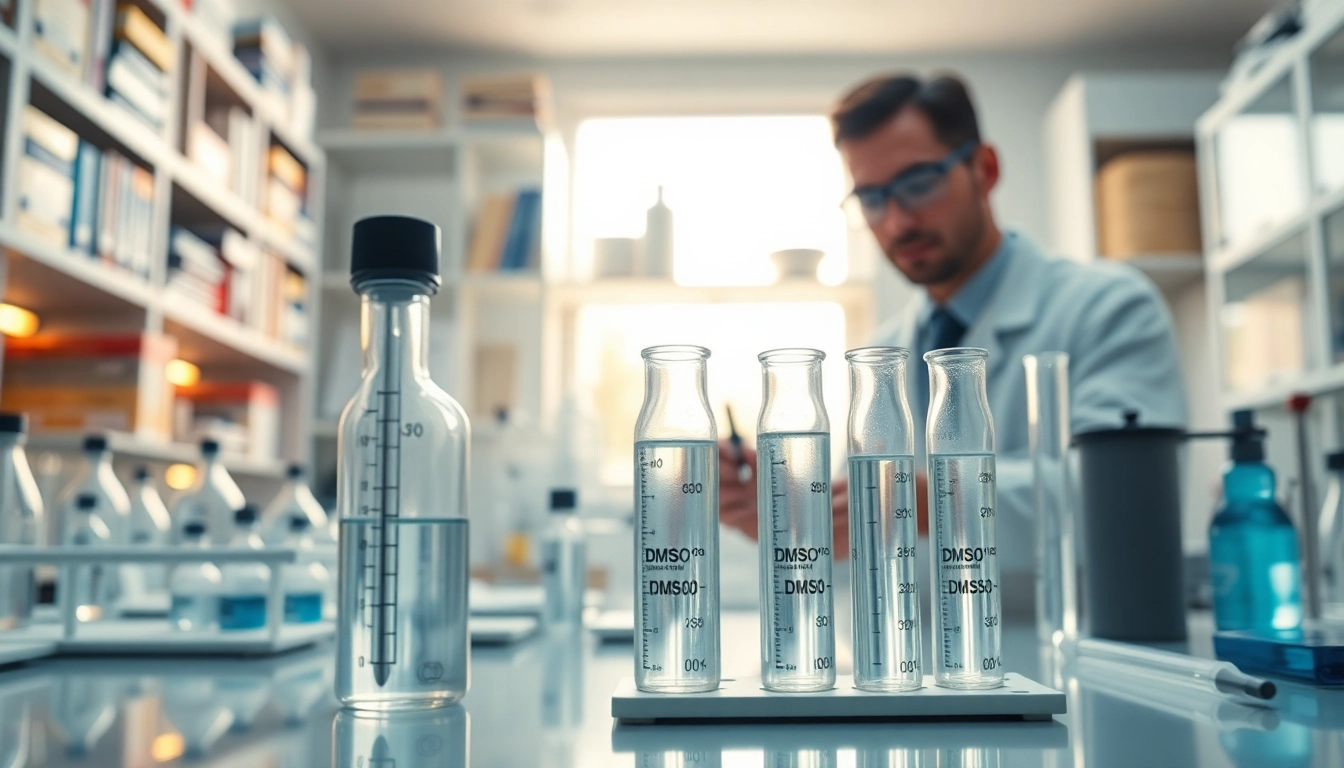
What is DMSO Organic?
Defining DMSO Organic
DMSO, or dimethyl sulfoxide, is an organic compound with a wide array of applications, primarily known for its properties as a solvent. It is a colorless, odorless liquid derived from natural sources like wood pulp, specifically extracted from lignin, which is a complex organic polymer found in the cell walls of plants. DMSO is categorized as an organic solvent due to its unique molecular structure, a significant factor that contributes to its efficacy in various applications. dmso organic not only serves in laboratory settings but has gained attention for its potential health benefits.
Chemical Composition and Properties
The chemical formula of DMSO is (CH₃)₂SO, indicating its structure, which consists of two methyl groups (-CH₃) connected to a sulfoxide group (-SO). This structure bestows DMSO with highly polar characteristics and the ability to dissolve both polar and nonpolar compounds, making it uniquely versatile amongst solvents. Its low toxicity combined with high boiling and freezing points further distinguishes it from many other solvents commonly used in laboratories and industries.
Comparing DMSO Organic to Other Solvents
When compared to traditional organic solvents like ethanol or acetone, DMSO offers several advantages. Its ability to dissolve a broader range of substances, including polymers and biodegradable materials, enhances its utility in various applications, from pharmaceuticals to home remedies. Furthermore, its relatively low volatility makes it a safer choice as it reduces the likelihood of inhalation exposure, presenting a more user-friendly approach for researchers and practitioners alike.
Benefits of Using DMSO Organic
Therapeutic Uses of DMSO Organic
DMSO is increasingly recognized for its therapeutic applications, especially in the context of pain relief and inflammation reduction. It is reported to penetrate biological membranes easily, allowing it to deliver other therapeutic agents to target tissues effectively. Additionally, studies have suggested that DMSO may possess antioxidant properties, further enhancing its appeal as a treatment option for various conditions, such as arthritis, sports injuries, and skin disorders.
Advantages in Chemical Reactions
In the realm of chemistry, DMSO is revered for its role as a solvent in various reactions. Due to its high polarity and ability to stabilize reaction intermediates, it is an excellent medium for both nucleophilic and electrophilic reactions. This property has cemented its status as a preferred choice in organic synthesis, helping to accelerate reactions and improve yields. Furthermore, it plays a crucial role in facilitating reactions that are challenging in other solvents, positioning DMSO as an indispensable tool for chemists.
Environmental Considerations
With the growing concern for environmental sustainability, the use of DMSO presents certain advantages. As a biodegradable solvent, it significantly reduces the ecological impact compared to traditional petroleum-based solvents. Furthermore, DMSO's low toxicity suggests that it poses minimal risk to human health and the environment, making it a favorable choice for both industrial and research applications.
How to Use DMSO Organic Safely
Dosage and Dilution Guidelines
When using DMSO, dosage accuracy is paramount to ensure safety and efficacy. For topical applications, a common dilution is 70% DMSO mixed with 30% distilled water; this concentration has been shown to be effective yet minimizes skin irritation. It’s essential that users start with lower concentrations and progressively increase as needed while monitoring for adverse reactions. Always consult safety data sheets and guidelines for appropriate usage in various applications.
Potential Side Effects and Precautions
While DMSO is generally regarded as safe, potential side effects may include skin irritation, allergic reactions, or the unintentional absorption of contaminants from the skin into the bloodstream. It is crucial to ensure the skin is clean before application and to avoid using DMSO near sensitive areas. Users are encouraged to perform patch tests to identify any allergic responses prior to broader application and to avoid using it alongside other medications unless advised by a healthcare professional.
Consulting Healthcare Professionals
Before utilizing DMSO, particularly for medical applications, consulting with a healthcare professional is vital. They can provide personalized advice based on individual health conditions and potential drug interactions. This is especially important for individuals who are pregnant, nursing, or have pre-existing medical conditions.
Applications of DMSO Organic in Different Industries
Pharmaceutical Applications
DMSO's primary application in the pharmaceutical industry is as a drug delivery system, whereby it enhances the absorption of various medications through biological membranes. It acts as a carrier for anti-inflammatory drugs, aiding in localized treatments for conditions such as arthritis or sports injuries. Furthermore, its role in pharmacokinetics as a solvent for drug formulations cannot be overstated, as it improves solubility for numerous compounds.
Industrial Uses
Beyond pharmaceuticals, DMSO finds extensive applications in various industrial settings. Its function as a solvent facilitates paint production, varnishes, and inks, where it dissolves complex mixtures, ensuring uniformity and consistency. Additionally, its use in plastics manufacturing further illustrates its versatility and value as a leading solvent in industrial applications.
Research and Development
In academic and scientific research, DMSO serves as an essential solvent for a multitude of chemical reactions. Its role in cell culture and molecular biology is particularly significant, as it is utilized to store and preserve cells and tissues. The ability to act as a cryoprotectant enables researchers to safely freeze and store living cells for future experiments, showcasing its importance in advancing scientific discovery.
FAQs about DMSO Organic
Can DMSO Organic be used for skincare?
Yes, many people use DMSO as a topical treatment for various skin conditions. However, it is crucial to dilute it properly and ensure the skin is clean to avoid adverse reactions.
Is DMSO Organic safe for internal use?
While some claim benefits for internal use, DMSO should only be taken internally under medical supervision to prevent potential side effects and interactions.
Where can I buy quality DMSO Organic?
Quality DMSO organic products can be purchased from reputable health food stores, pharmacies, or online retailers that specialize in natural health products.
Are there any known interactions with other medications?
Yes, DMSO can interact with various medications, enhancing their absorption or altering their effects. It's essential to consult a healthcare provider before combining treatments.
Why is DMSO Organic popular in organic chemistry?
DMSO's high polarity, ability to dissolve a wide variety of substances, and low toxicity make it a favored solvent among chemists, especially for organic synthesis reactions.