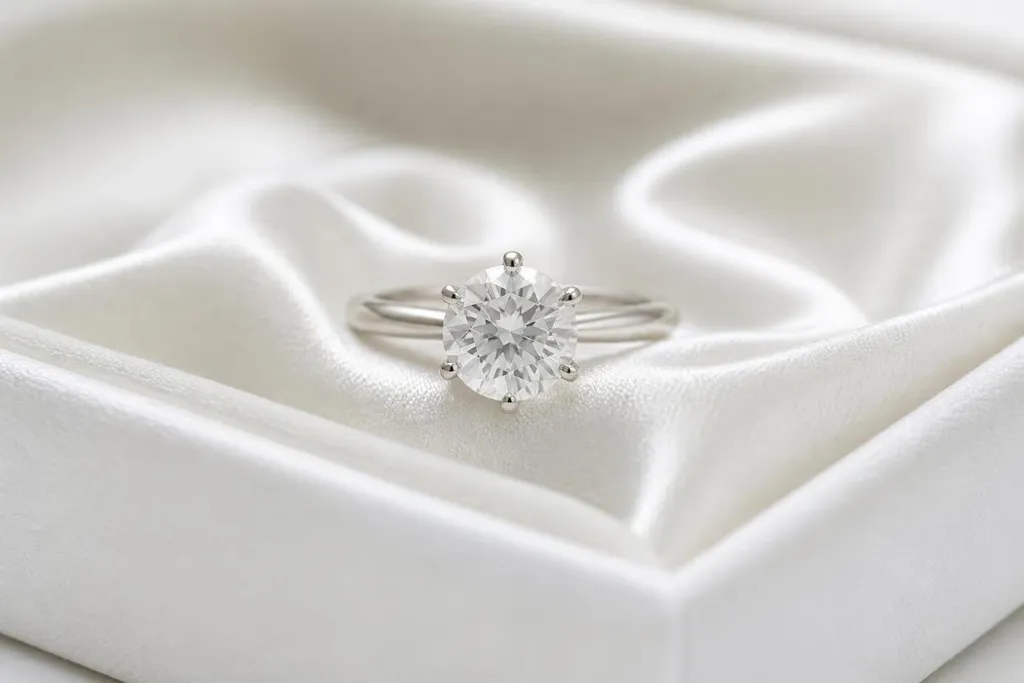
The number of prongs around a diamond may seem like a minor construction detail, yet it can change both the appearance and practical character of an engagement ring. A six-prong setting places additional points of contact around the centre stone, creating a secure, balanced frame while retaining the open appearance associated with classic claw settings. It is particularly appealing for wearers who want their diamond to remain clearly visible but appreciate the reassurance of a little more metal supporting it.
For someone considering this refinement, this upgrade offers a way to introduce a six-prong arrangement while preserving the fundamental character of the engagement ring. The choice is not simply about adding two extra claws. Prong number influences the diamond's outline, the symmetry of the setting and how substantial the centre stone feels within the finished design.
Why Choose Six Prongs Instead of Four?
Four-prong settings remain popular because they use relatively little visible metal and can leave much of a diamond's perimeter exposed. Six prongs approach the same task differently.
By distributing the securing points around more of the stone, a six-prong setting provides additional support around its circumference. If one prong is damaged, there are also more remaining contact points helping to hold the diamond in position until the ring can be professionally inspected.
This makes the arrangement worth considering for an engagement ring intended for frequent wear.
A six-prong setting does not remove the need for sensible care. Fine jewellery should still be removed for heavy manual work, sport and activities that could subject the ring to significant impact. Prongs can also wear gradually and should be checked periodically.
The benefit is better understood as additional security within an elegant open setting rather than a guarantee against damage or stone loss.
How Six Prongs Change the Diamond's Silhouette
Prongs are visible from above, so their placement becomes part of the centre stone's outline.
Around a round brilliant diamond, six evenly spaced claws can create an attractive sense of symmetry. Depending on their position, they may subtly encourage the eye to perceive a more rounded or softly scalloped profile compared with the squarer visual framing sometimes created by four prongs.
The effect depends on the shape of the stone and the proportions of the claws themselves. Fine prongs can remain discreet, while heavier examples become a stronger part of the design.
Metal colour matters as well. White gold or platinum claws can blend visually with a colourless diamond, helping the additional prongs appear less prominent. Yellow or rose gold creates greater contrast, making the setting structure easier to see.
For someone who appreciates traditional solitaire architecture, that visible craftsmanship can be part of the appeal rather than something that needs to disappear.
Why Centre-Stone Size Matters
A larger diamond can make a six-prong arrangement particularly compelling.
Someone choosing a 2-carat centre stone, for example, may prefer six prongs not simply because the diamond is more valuable or visually impressive, but because its greater dimensions create more perimeter to secure. Additional contact points can feel proportionate to the scale of the stone.
The setting can also visually frame a larger diamond more convincingly. Four very fine claws around a substantial centre may produce an intentionally minimal appearance, whereas six can give the setting a stronger sense of completeness.
On a smaller stone, however, the balance needs greater care. Excessively heavy prongs can occupy too much of the visible outline and make the setting appear crowded.
The quality of the proportions therefore matters as much as the number of claws. A successful six-prong design should still allow the diamond to remain the obvious focal point.
Everyday Wear and Long-Term Maintenance
Six prongs provide additional points of security, but they also mean there are six individual components to monitor.
Regular cleaning helps prevent residue from building up around the claws and beneath the centre stone. Keeping these areas clean allows light to interact with the diamond more effectively and makes the condition of the setting easier to observe.
Professional inspections are useful for checking whether any prong has become worn, lifted or damaged. This is especially important if the ring receives a knock or begins catching unexpectedly on clothing.
The wearer's routine should also influence the decision. Someone who frequently works with their hands may place greater importance on security, while another person may prioritise the lightest possible visual setting.
Neither preference is wrong; the setting should reflect how the ring will actually be worn.
Final Thought
A six-prong setting combines traditional engagement-ring styling with an added degree of security around the centre diamond. The extra claws create a balanced frame, influence the stone's visible silhouette and can feel particularly appropriate around a more substantial centre.
For someone who wants an open claw setting but prefers greater support than a four-prong arrangement provides, it is a thoughtful refinement. Like many successful jewellery upgrades, the difference is small in scale but meaningful in everyday use.